
TL;DR
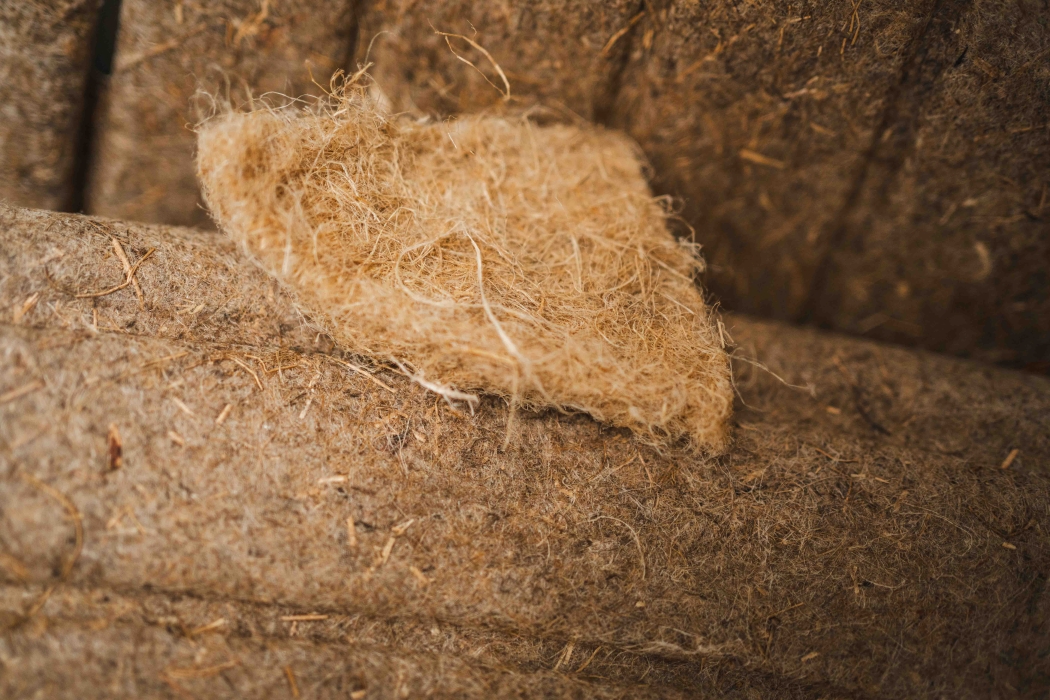
- Felt, Hemp, Demin and flax can be pressed into strong, curved elements.
- They allow tighter and more complex shapes than wood.
- You choose the finish: the fibre itself or a lacquer.
- The raw material can be traced back to the field.
Why using it?
Fewer cracks. Wood has a limit to how far it bends before it cracks. With flax, we position the fibres so the curve holds, which makes tighter shapes possible.
Made from the part linen leaves behind. When flax is harvested, the long fibres become linen. We take the short ones and bend them into strong, curved elements, with almost complete freedom of shape.
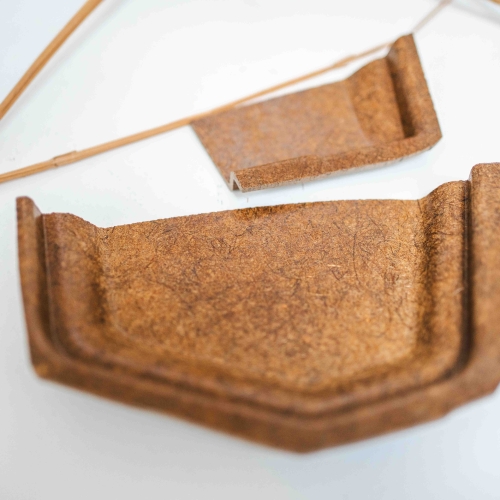
Strength. Pressed under high pressure in a mould, the fibre mats become solid, curved elements that hold their shape.
Biobased. Flax are natural fibres with a smaller impact, and you can trace the raw material back to the field. When your client asks where it comes from, you have the answer.
Curious about a project with flax?
What are biomaterials?
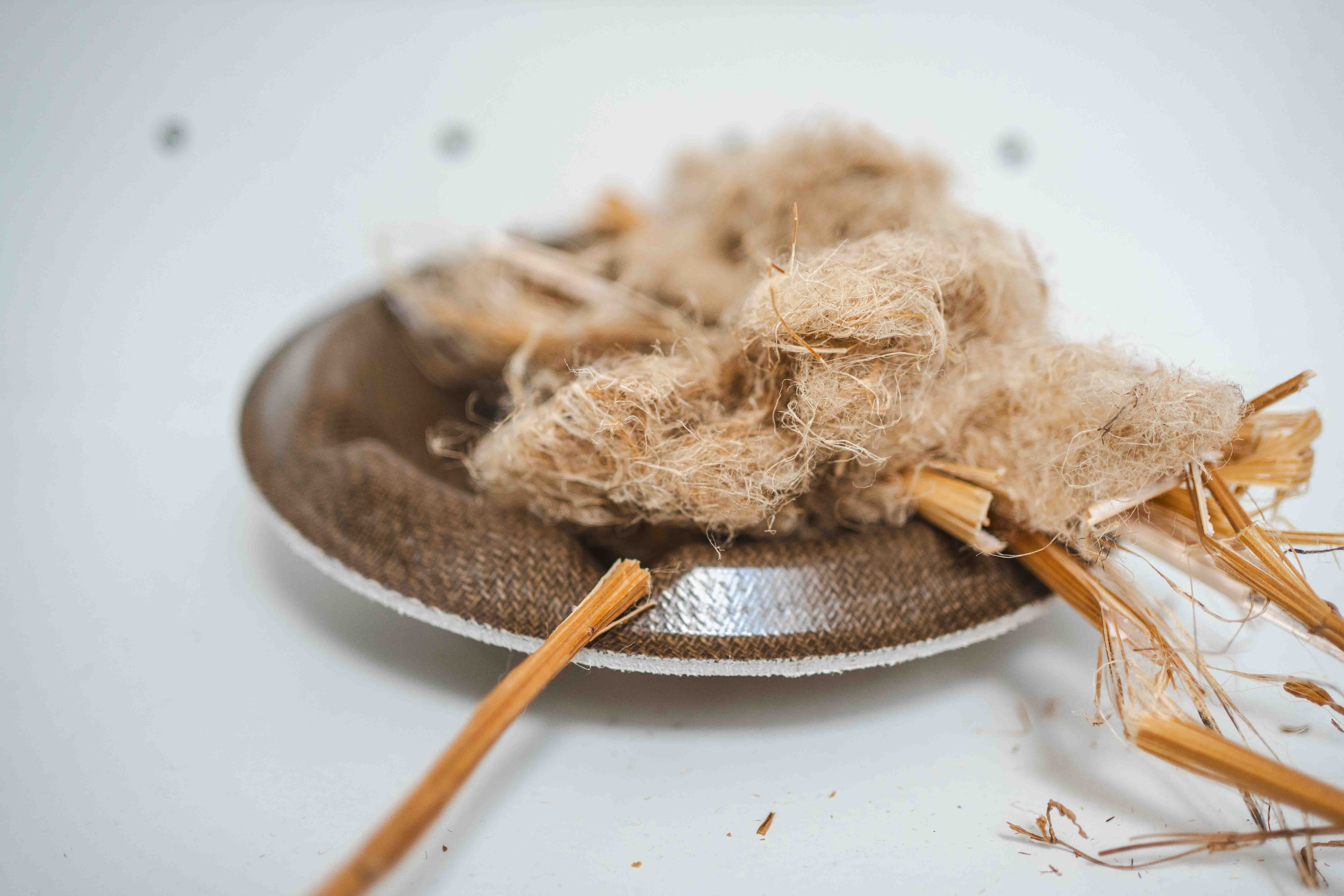
Natural fibres such as hemp and flax, processed into mats. We position the mats, cover them with glue and press them under high pressure into a mould until they take the shape you want.
Why does fibre direction matter?
Because it decides whether a curve holds or cracks. Flax fibre is both long and wide, so the way we place it determines whether the bend holds.
How is flax finished?
You can keep the natural structure of the fibre visible, or we can apply a top layer over it. That layer also lets you adjust the colour to your design.
Does this replace wood and felt?
No. It is a third route alongside them, for designs where wood reaches its limits or where the origin of the material matters.
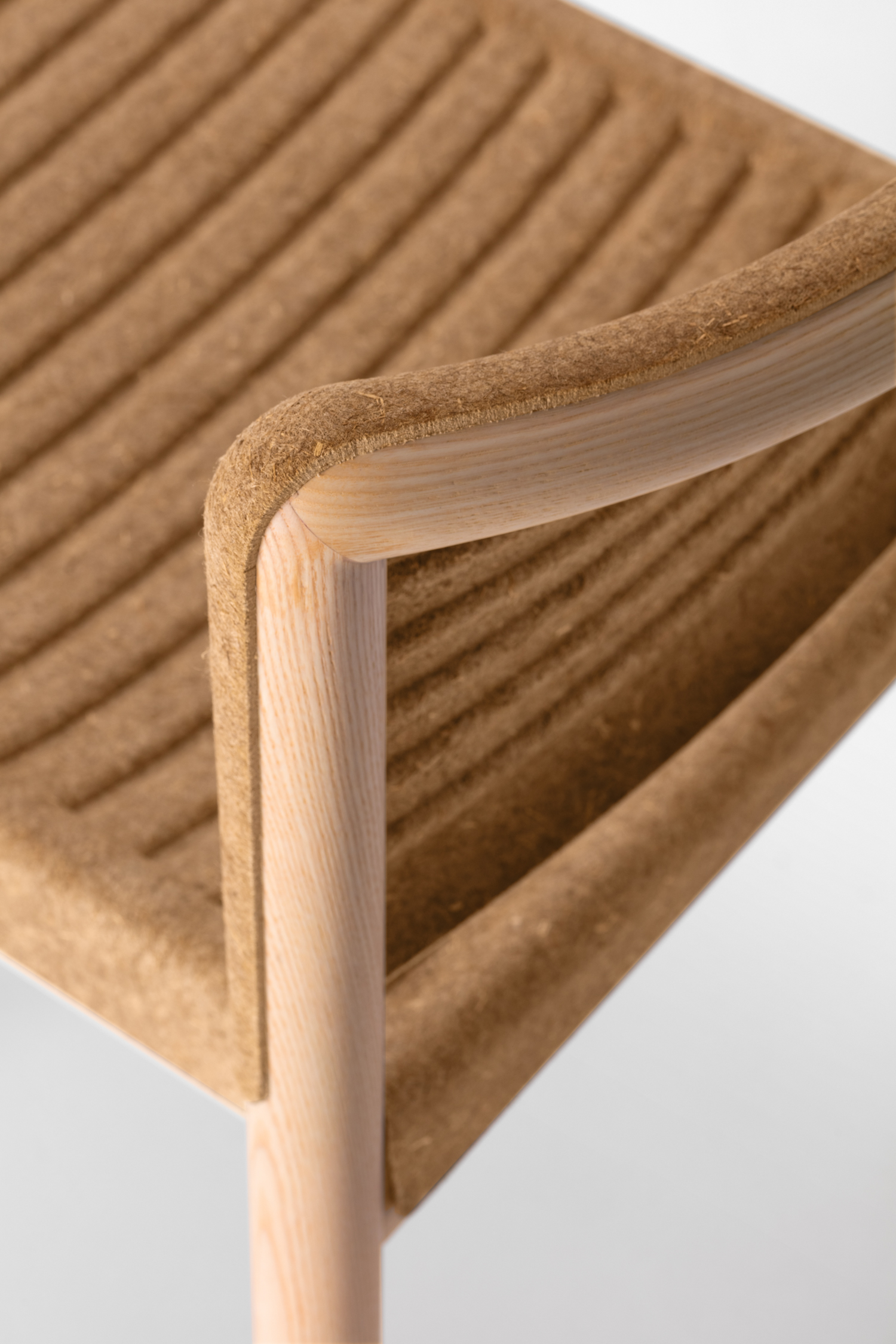
Working on a chair, a shell or a panel that didn’t work in wood? Challenge us.


